Cars need roads and rules

On the first morning of December 1913, a manager and four attendants opened a pagoda-roofed shelter on Baum Boulevard in Pittsburgh and waited for cars to arrive. The Gulf Refining Company had built America’s first true drive-in gasoline station: a pump, free air and water, tires installed while you waited. Until then, most American motorists bought gasoline the way they bought turpentine: in cans at the pharmacy or the hardware store.1
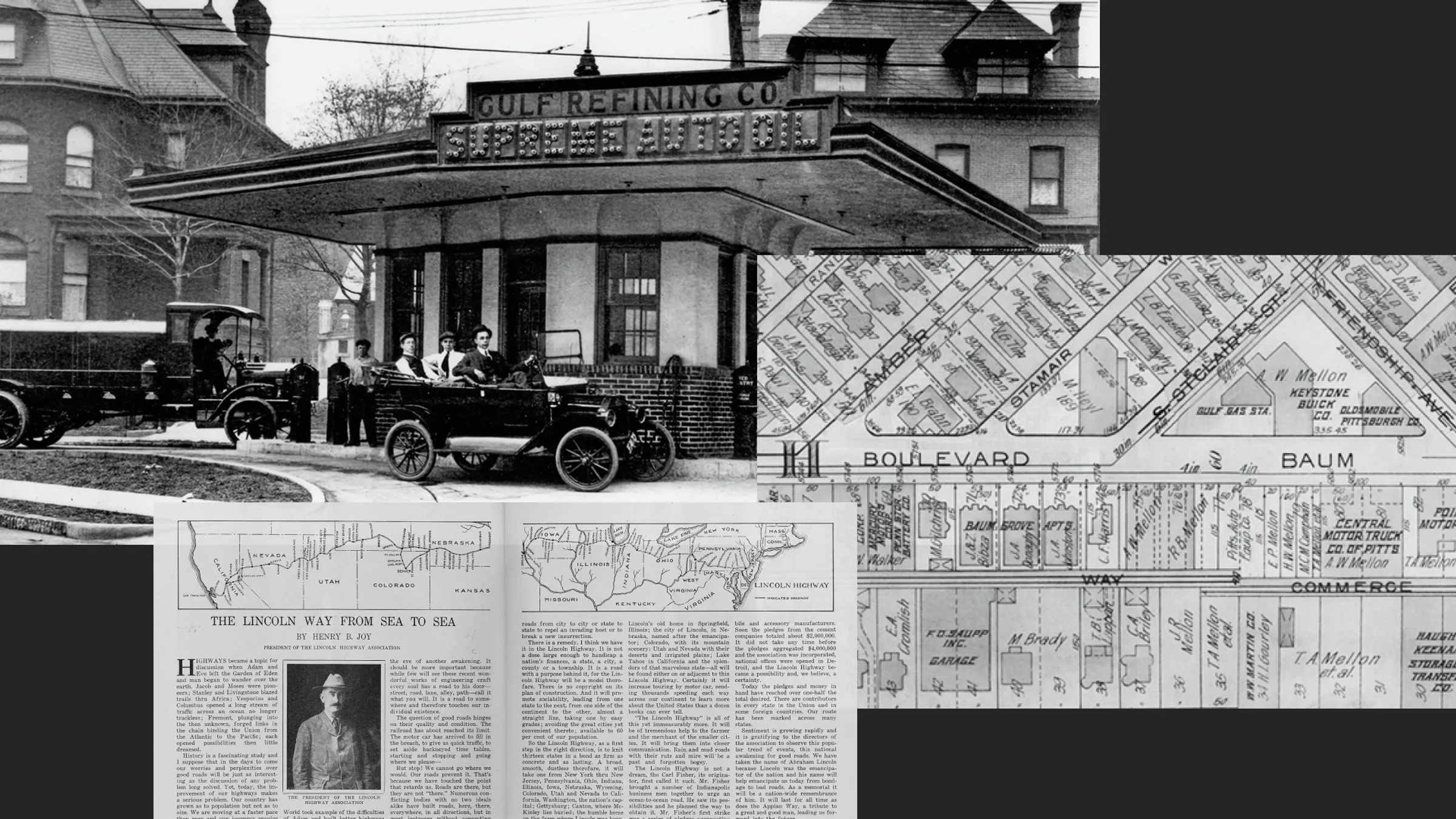
A few weeks earlier, bonfires had burned across thirteen states to dedicate the Lincoln Highway, the new coast-to-coast road from New York to San Francisco. The auto industry had pledged a million dollars within a month of its proposal, but Henry Ford refused to give a dollar, reasoning that if industry built the roads, the public never would.2 He turned out to be right. The private money was never enough, and within three years Congress passed the first federal-aid road act, and the public built the roads.3
Over the years, the station on Baum Boulevard multiplied: some fifteen thousand filling stations in 1920 became 121,513 by 1929.4 Highways, gas stations, garages, parking lots, motels (motor hotels), drive-thrus—an entire economy assembled itself at the curb. All of it made the automobile more valuable, but almost none of it was built by the automakers.
We’re at a similar inflection point in healthcare: we have our car, and we are building our assembly lines. But for our rules and roads, we need to work together and with everyone else.
Rules are for going faster, not slowing down
Britain’s Locomotives Act of 1865 required every self-propelled vehicle to carry a crew of three, one walking sixty yards ahead with a red flag: two miles per hour in town, four miles per hour in the country.6
It was not an unreasonable law when it passed; the machines it governed were heavy steam engines on roads built for horses, and no motor car yet existed to be slowed. The failure was in what the rule fixed on: it capped the machine’s speed instead of governing the conduct of the road, so it could not adapt when the machine changed.
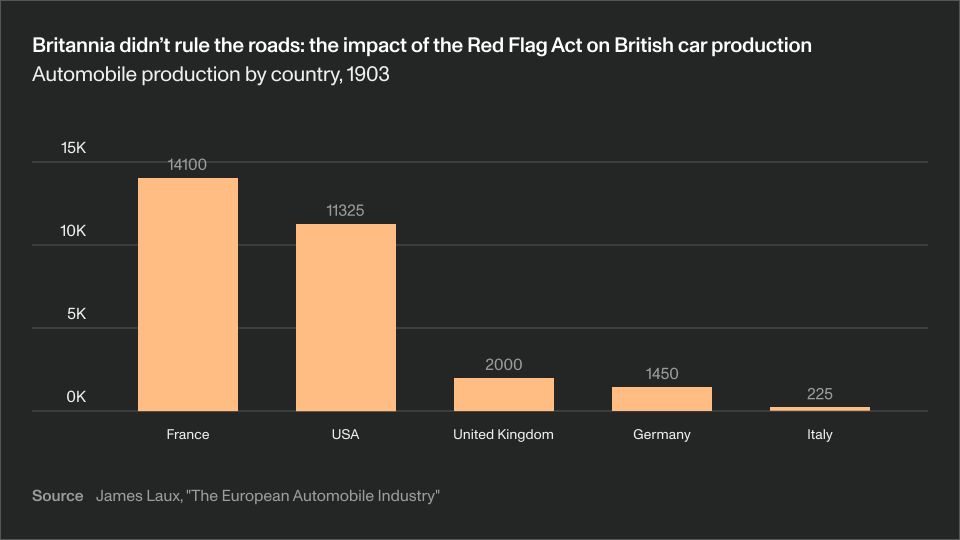
It was still binding in 1886, when Karl Benz patented his Motorwagen in Germany.7 Britain, which had invented the steam engine, spent those years at walking pace while watching Germany and France build the motor industry. Parliament relented only in 1896, thirty-one years on.8
America wrestled with the same choices. For example, some forty-two thousand Cincinnatians, more than a tenth of the city, signed a petition in 1923 to fit every car with a governor capped at twenty-five miles per hour, and it was beaten only after the industry mobilized against it.9 Instead, in 1935, the first national manual of uniform traffic control arrived, a shared set of signs for every road in the country.10
Rather than regulating the car, these rules governed how drivers behaved and what they could expect of one another—so a motorist from Ohio could commute safely among strangers in Texas without slowing down. By one federal estimate, the Interstate system, begun in 1956, contributed roughly a quarter of America’s productivity gains across the four decades that followed.11
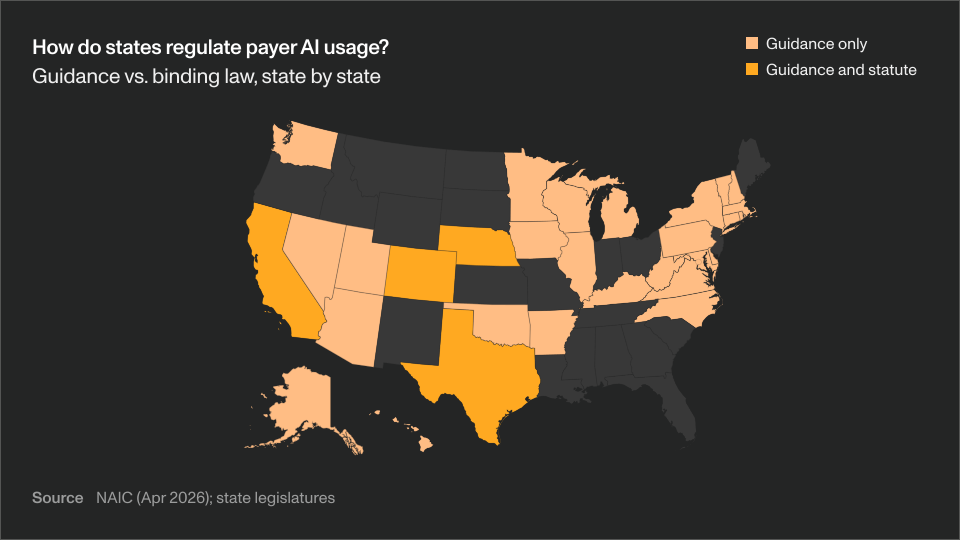
More than 250 AI-in-healthcare bills landed in statehouses in 2025 alone, with the rules taking shape sorting into the same two groups.12 One group walks in front of innovation carrying a red flag: for example, Texas prohibits automated systems from making adverse determinations even “partly”,13 and Colorado wrote a comprehensive regime for “high-risk” systems, but delayed them before they took effect. After a federal court paused enforcement, lawmakers replaced the original framework with a narrower law.14
The other group publishes traffic rules to govern conduct and collaboration: the NAIC’s model bulletin, adopted by some two dozen states, expects governance, risk controls, audit, and board accountability; California pairs a clinician’s final say with auditability and fairness requirements;15 CMS’s Interoperability and Prior Authorization final rule moves prior authorization for affected health plans onto standardized FHIR APIs;16 and CMS’s WISeR model brings AI-assisted review into Original Medicare with, in CMS’s words, final decisions “made by licensed clinicians, not machines.”17 Importantly, everyone agrees that a clinician must make the call on a medical-necessity denial: Arizona and California write it into law, the health plans affirm it in their pledges, and CMS’s model requires it.18
There are risks to the latter approach; innovation always carries them, and never more than when the stakes are clinical. But defaulting to a cap on innovation is a false choice for safety. It ignores the risk in the opportunity cost—the millions of lives that won’t be improved if the technology idles—and it tends to treat risk as binary. The answer to risk in innovation is innovation in regulation: supervised sandboxes with clear success criteria, graduated licensing that expands a system’s autonomy as it builds trust, and even regulating the technology with technology—like the seat belt, or Otis’s elevator brake, and the other safety-by-construction examples in Chapter 3. Rules like these demand a clear understanding of what the technology can and cannot do, which, in the case of AI, is also changing rapidly.
It’s kind of like the speed limit sign. You can’t really put that sign up until you know what the car can do.
David Shulkin, the former US Secretary of Veterans Affairs, has worked in every seat at that table—as a physician, a hospital executive, in payer organizations, and in government.
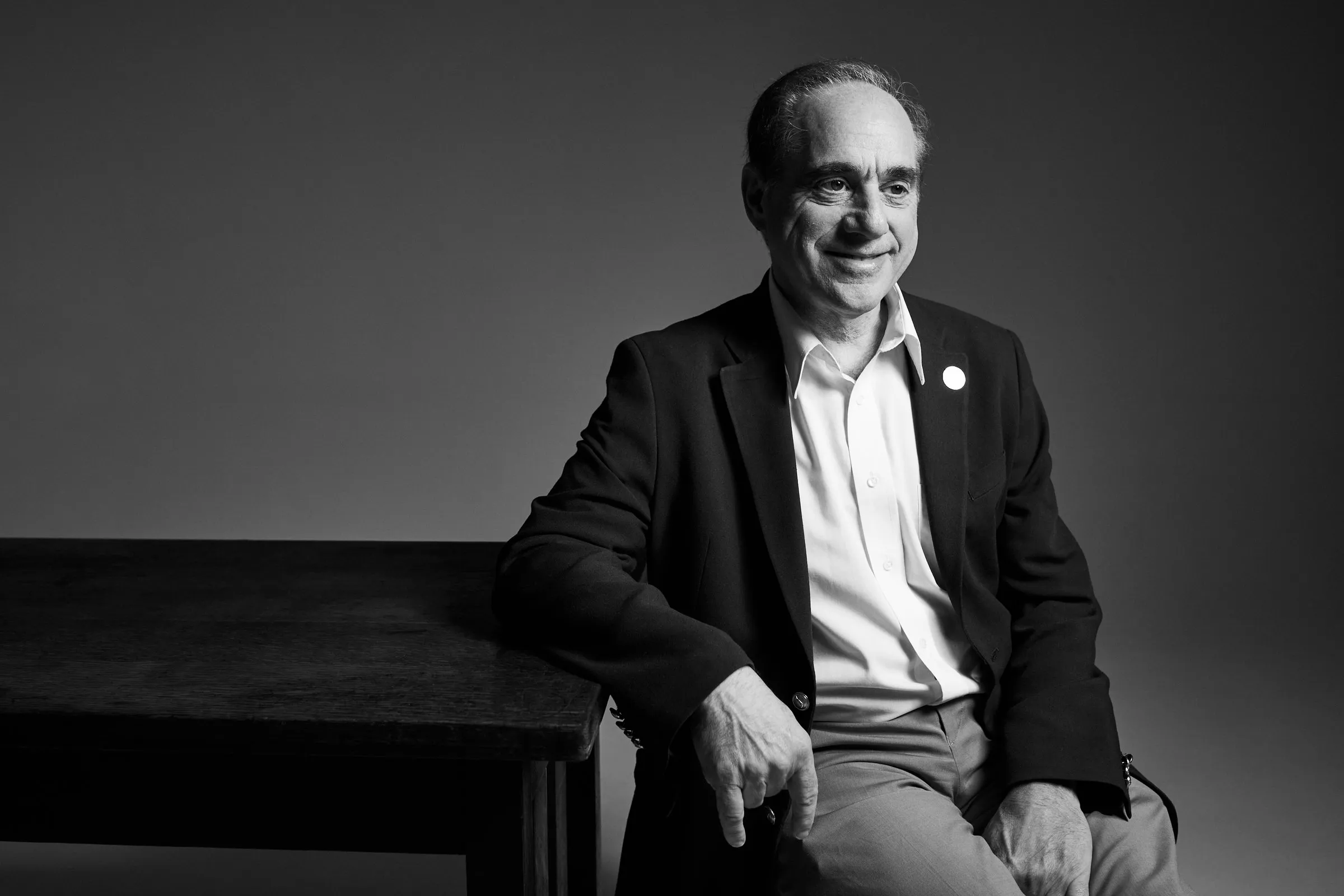
“There needs to be the right governance in place and the right regulatory framework in place,” he says, “because this is a technology that could go in directions that, frankly, have unintended consequences, or even in some cases, intended consequences that aren’t the right ones. So I think having everybody sitting at the table, including policymakers, as well as providers and payers and manufacturers sitting down together to put that framework together, that governance structure, I think, is going to be very important.”20
Dr. Shawn Griffin is the President and CEO of URAC, the accreditation body much of the industry volunteers to be measured against: “If we cannot come together as an industry around what are the rules we’re willing to play by, the rules will be imposed upon us. Or these things will get settled in the courtroom in very painful and loud ways in the meantime.”21
Regulation must not only be in service of innovation but keep pace with it, which is why those who understand the technology best cannot wait at the edge of the conversation; they have to pioneer it.
Winners share the road
When Volvo perfected the three-point seat belt in 1959, they gave the patent away to its competitors. Since then, the belt is credited with saving at least a million lives.22
Tesla opened its charging plug to rivals in 2022; Ford and GM adopted it within months, and SAE International standardized it for everyone.23 Apple bought roughly $8 billion of components from Samsung in a single year (while the two were suing each other).24 McLaren won the 2024 Formula 1 constructors’ championship with engines supplied by Mercedes.25 And Bank of America built BankAmericard into a proprietary product, then, in 1970, handed the network to a consortium of the competing banks that issued it (now called Visa). Today, banks compete aggressively while sharing the rails.26
The alternative is Fordlandia: wanting to own every input, Ford secured two and a half million acres of the Amazon in 1927 to grow his own rubber. But blight and revolt ruined it, and in 1945 the company sold it back to Brazil for $244,200 of the $20 million invested.27
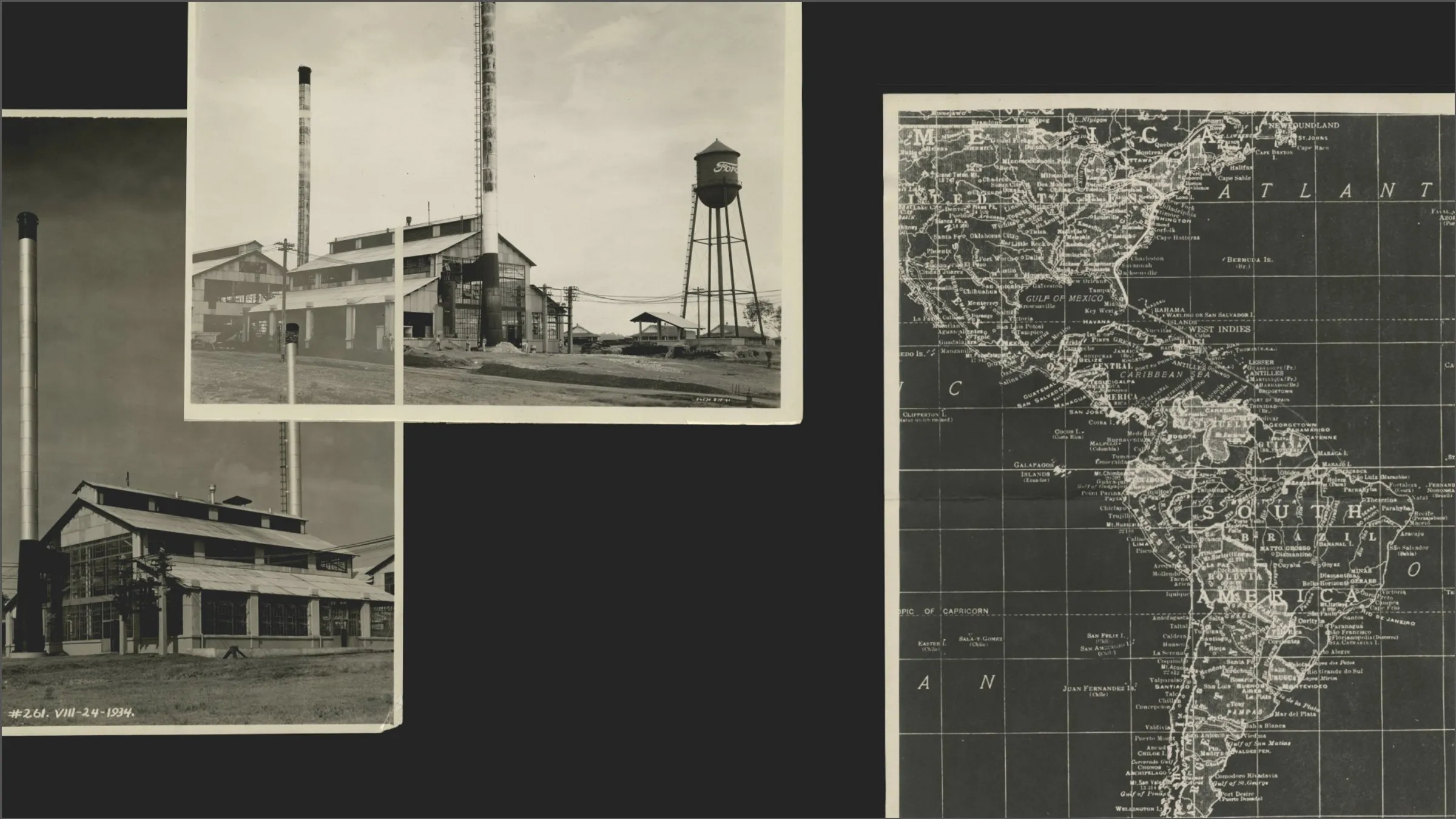
Healthcare risks its own Fordlandia if every health plan, guideline provider, care-management system, system of record, and EHR/EMR guards its own acre of the ecosystem. Each holds the keys to its door, but opening the door is not charity; it is what made Volvo, Tesla, and Visa more valuable. For example, many clinical criteria are licensed into closed, product-by-product integrations, under restrictive terms that bar automated or AI use of the content except where separately agreed. But the opportunity for everyone involved could be much larger: criteria in machine-readable, AI-executable form, on published terms, to any qualified system.
Craig Samitt, the former CEO of Blue Cross Blue Shield of Minnesota, has seen both sides of those doors.
Sometimes change requires collective sacrifice as opposed to win-loss. Those organizations and those groups that come together, all willing to try something new and willing to give a little, are the ones that I find innovate the best.
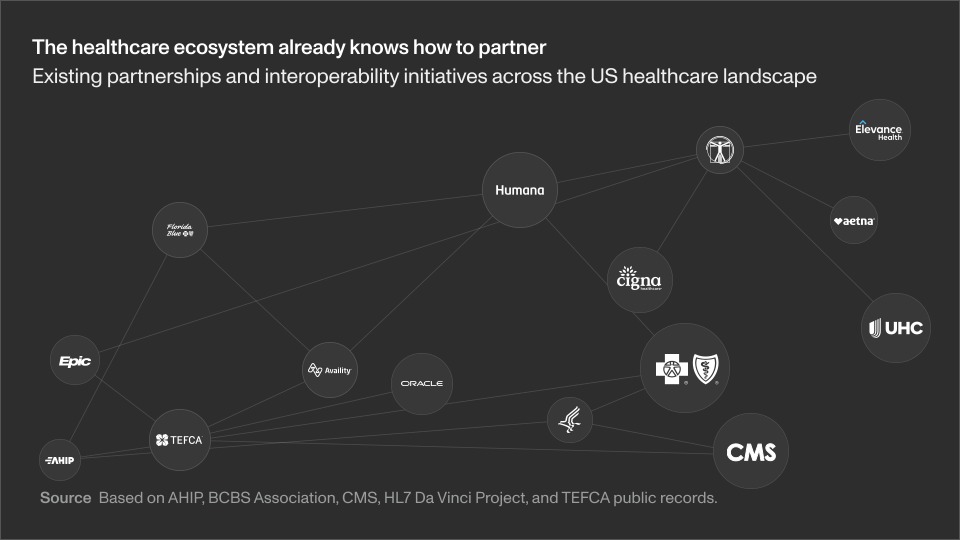
The healthcare ecosystem already knows how to partner. Availity began in 2001 as a joint venture between two direct competitors, Florida Blue and Humana. The Da Vinci Project seats UnitedHealthcare, Elevance, Humana, Cigna, and CVS at one table with Epic, supporting the FHIR prior-authorization implementation guides CMS now recommends.29
Under TEFCA, the federal Trusted Exchange Framework and Common Agreement, eleven designated networks (Epic’s and Oracle’s among them) carry patient records on shared rails.30 And in June 2025, nearly fifty plans—convened by AHIP and the Blue Cross Blue Shield Association, covering 257 million Americans—stood with HHS and CMS and committed to dates: electronic prior authorization on FHIR APIs by January 1, 2027, and, in 2027, at least eighty percent of electronic approvals answered in real time.31 Within a year, they reported 6.5 million fewer prior authorizations.32
“The first organization to go through our accreditation was accredited as both a developer and a user. That's one advantage of working with so many stakeholders across health care—my board includes the AMA, the hospital association, insurance plans, employer groups, all sitting around the same table, and we built a program meant to apply to all of them,” says Griffin.
Shulkin points to the Covid vaccine: “We were able to, through a public-private partnership, [bring] people together that normally think of themselves as competitors… we were able to bring new science to help people, to save lives, in less than a year. And that’s truly amazing. And so that type of experience of bringing people together, focusing them, giving them the resources to accomplish things, I think is the way we should be tackling other major problems in our society.”33
Vanessa Colella, president and CEO of Stellarus, explains her company’s collaborative philosophy. “How do we create an open ecosystem—one that supports a longitudinal digital health record and a data model innovators can safely and securely build on top of…healthcare doesn’t have an innovation shortage, it has a flexibility problem, and a lot of that comes down to institutions being locked into a particular technology platform.”34
The roads outlast the cars
In Chapter 2, Peggy Anderson had two stories: one in which several AI tools each did their job well and she was worse off anyway, and one in which everyone had the information and access they needed, so the admission never happened, her surgeon had an answer before asking for it, and her nine months of care cost less than a fifth of what it otherwise would have.
What separated her two futures was whether her surgeon’s record, her plan’s platform, and every other third-party system could talk to each other, and whether the rules sped them up or stood in the way.
The instinct today is to focus on regulating the car. But the AI tools in Peggy’s story will be replaced within a few years. The models will improve past recognition, the vendors will consolidate, and the interfaces will be rebuilt several times over. What will still be standing is whether the clinical guidelines were built for the models, whether Peggy’s record moved on a shared standard, and whether the rules facilitated the work instead of blocking it. The traffic code has outlived the cars it was written for. Volvo’s 1959 sedan is long gone, but Volvo’s seat belt is still in every car on the road. BankAmericard is no more, but an entire financial industry still runs on the network it gave way to.
I honestly think it will become like electricity. Electricity is everywhere, but it’s also nowhere. You don’t notice electricity. You don’t walk into a room and say, wow, this room has really great electricity. I think in ten years’ time we’ll feel the same way about AI.
The future of healthcare is optimistic. This history runs in one direction: the right partners will collaborate, the right roads will get built, and the right rules will get written. It’s just a matter of time. The industry can lose years of better member outcomes to slow partnerships and closed doors. Or it can skip Fordlandia, accelerate collaboration, and win together, today.
Notes
- 1.
- 2.
- 3.
- 4.
- 6.
- 7.
Deutsches Patent- und Markenamt (patent DE 37435, filed January 29, 1886).
- 8.
See note 6; Parliament repealed the red-flag restrictions in 1896.
- 9.
Peter D. Norton, Fighting Traffic (MIT Press, 2008), 96-98; Motor Age, “Governor Ordinance Voted Down” (November 15, 1923).
- 10.
U.S. Department of Transportation, National Transportation Library (Manual on Uniform Traffic Control Devices for Streets and Highways, 1935).
- 11.
- 12.
- 13.
- 14.
- 15.
- 16.
- 17.
- 18.
- 20.
David Shulkin, shoot interview, 2026.
- 21.
Dr. Shawn Griffin, virtual interview, July 8, 2026.
- 22.
- 23.
- 24.
- 25.
- 26.
- 27.
The Henry Ford, “Ford Rubber Plantations in Brazil”. Sale price $244,200 per Greg Grandin, Fordlandia (2009).
- 29.
- 30.
- 31.
- 32.
- 33.
David Shulkin, shoot interview, 2026.
- 34.
Vanessa Colella, shoot interview, 2026.